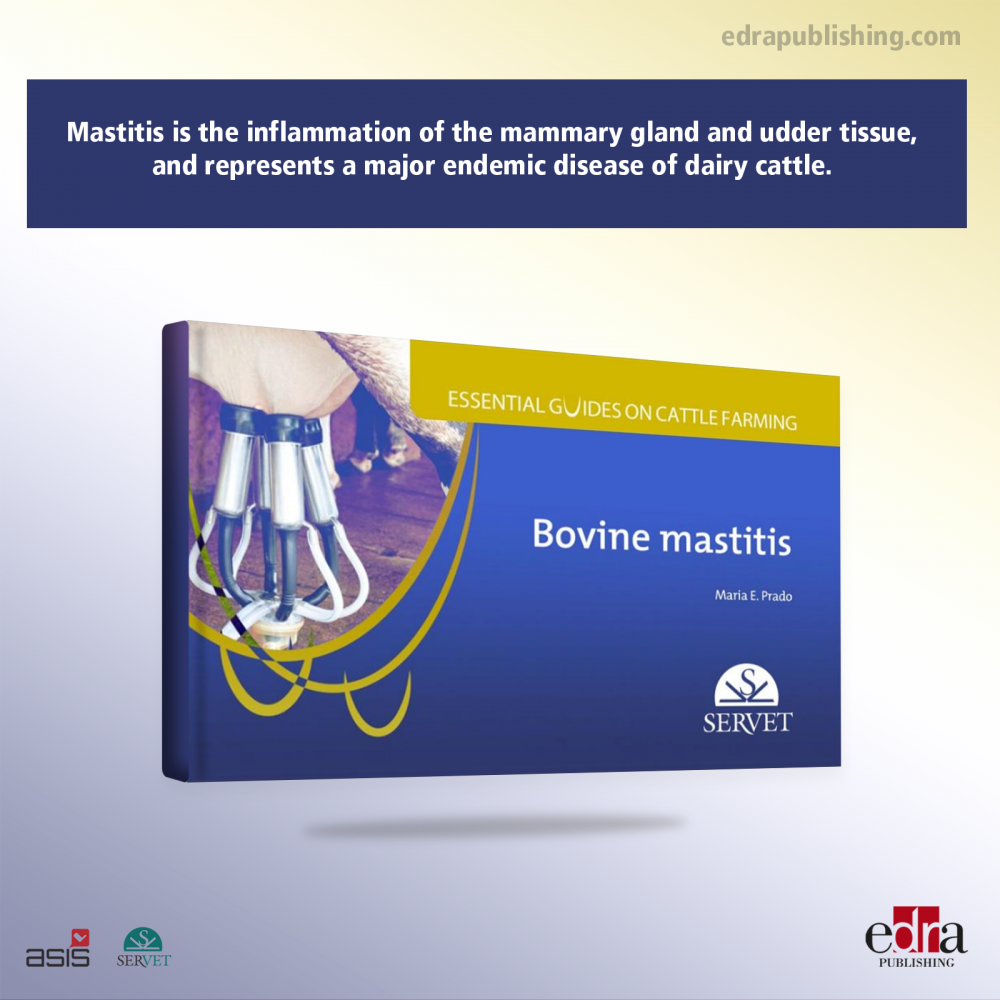
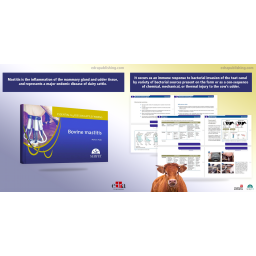
Mastitis represents a major endemic disease of dairy cattle, being a very complex disease that depends on several factors and usually presented subclinically in herds. The treatment and control entails high costs and losses for the industry. The author has developed an accurate, visual review analysing the most highlighted features of this condition and pointing out the main control measures to prevent it.
Mastitis represents a major endemic disease of dairy cattle, being a very complex disease that depends on several factors and usually presented subclinically in herds. The treatment and control entails high costs and losses for the industry. The author has developed an accurate, visual review analysing the most highlighted features of this condition and pointing out the main control measures to prevent it.
Authors:
MARIA E. PRADO
MV, PhD, DACVIM.
Dr. Maria E. Prado obtained her veterinary medicine degree (MV) from the University of Zulia in Maracaibo, Venezuela in 1987. Following two years of bovine private practice, she came to the United States to further her education. She completed a one year internship in Food Animal Medicine and Surgery and Equine Theriogenology at Oklahoma State University (1993-1994) followed by a residency in Food Animal Medicine and Surgery (1995-1998) and board certification in the American College of Veterinary Internal Medicine (2000). Dr. Prado performed graduate studies in Veterinary Pathobiology and obtained a PhD at Oklahoma State University in 2003 and a postdoc in Molecular Virology. Since 2005, she has been employed by the University of Tennessee where she conducts research in the areas of bovine mastitis and respiratory disease as well as teaching.
Key Features:
➜ Online visualisation of the sample chapter.
➜ Presentation brochure in PDF format.
➜ Author ́s CV.
➜ Sample chapter compatible with iPad.
Table of Contents:
1. The bovine mammary gland
Macroscopic anatomy
Microscopic anatomy
Physiology of the lactation
Mammary gland growth (mammogenesis)
Milk production and lactation
Milk ejection reflex
Defense mechanisms
Physical barriers
Cellular defenses
Noncellular defenses
2. Epidemiology
Prevalence and incidence
Distribution and frequency of isolation of
pathogens from clinical mastitis
Source and transmission of infection
Risk factors
3. Pathogenesis
Infectious aetiology
4. Clinical presentation
5. Diagnosis
Subclinical mastitis
SCC
Clinical mastitis
Physical exam
Milk culture and sensitivity
6. Treatment
7. Control and prevention
8. Case investigation
Herd goals
Mastitis problem investigation
9. References
Data sheet
Specific References
The objective of this guide is to provide a practical summary regarding current knowledge and understanding of porcine reproductive and respiratory syndrome (PRRS). The information presented is focused on clinically relevant and practical information to help field veterinary surgeons and farm team personnel interested in animal health.
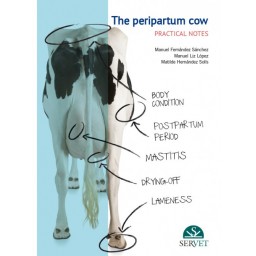
The cow’s peripartum period from a practical and dynamic point of view, explained through theoretical explanations and a huge collection of clinical cases. Normally, disorders or conditions occurring in the peripartum period are not independent events; they are the result of the interaction of several events occurring over time. The authors highlight here the importance of assessing bovine pathologies as a whole. It is the only manner for the clinician to anticipate conditions that may appear during the peripartum period.
Infectious bronchitis is an acute and highly contagious respiratory disease of chickens characterized by respiratory signs comprising gasping, coughing, sneezing, tracheal rales and nasal discharge. In addition, severe respiratory distress may occur in young chickens. Respiratory distress, decrease in egg production, and loss of internal egg quality and eggshell quality have been reported in layers. Some strains of the virus produce severe kidney damage and may be associated with high mortality.
This book helps the reader to interpret the reproductive status of the cow using an outstanding selection of photographs with an eminently practical focus. The carefully chosen images let the reader visualize what they are touching during an examination, and describe the more basic procedures, such as rectal palpation or artificial insemination. It also highlights the importance of using oestrus synchronization protocols in routine reproductive practice.
Mastitis represents a major endemic disease of dairy cattle, being a very complex disease that depends on several factors and usually presented subclinically in herds. The treatment and control entails high costs and losses for the industry. The author has developed an accurate, visual review analysing the most highlighted features of this condition and pointing out the main control measures to prevent it.