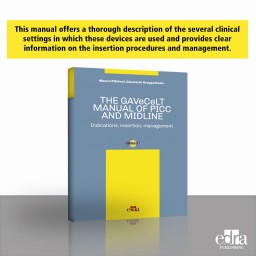
The GAVeCeLT manual of...
The use of intravenous access devices is fundamental for all patients needing frequent blood sample collection, artificial nutrition, chemotherapy, antibiotic therapy, and any other intravenous treatment.

Active filters
The use of intravenous access devices is fundamental for all patients needing frequent blood sample collection, artificial nutrition, chemotherapy, antibiotic therapy, and any other intravenous treatment.
This handbook, which highlights the importance of achieving high quality milk levels through a practial and visual approach, has been written by authors with a wide experience in this field. Numerous graphic resources (images, graphs, tables, flowcharts) have been included to complement the information provided and make the contents more understandable and accessible to readers.
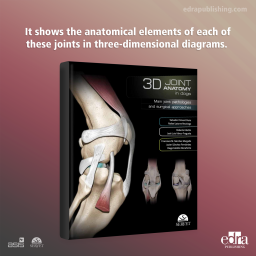
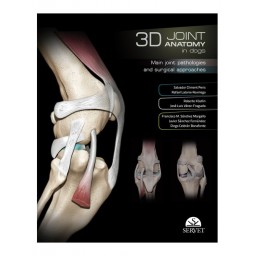
A visual guide with a strongly educational approach covering the main joints in the limbs of the dog. It shows the anatomical elements of each of these joints in three-dimensional diagrams. The views chosen for each case have been selected for a practical purpose, showing the position of the elements involved in the most commonly used surgical approaches. It also describes the key orthopaedic conditions affecting each joint and the most commonly used surgical approaches. It contains a large number of images and illustrations, and a selection of views presented in digital video format.
The problem-oriented approach (POA) is the method recommended by the College of Internal Medicine to address and resolve medical questions and problems.
Although nasal cytology is still a little used diagnostic approach, it has often proved to be decisive: it makes it possible to distinguish between different forms of rhinopathy – inflammatory from infectious, allergic from non-allergic vasomotor, and bacterial from viral and fungal forms, as well as to diagnose the presence, in the same patient, of various “overlapping” forms. It is also important to consider other important aspects that make cytology a practical diagnostic method, accessible to all rhinoallergology services: the simplicity and low invasiveness of the technique. This book fills a gap given that, to date, there have been no textbooks or atlases dealing with this specific topic.