Pharmaceutical...
The world of health is undergoing a significant evolution. There is a tangible sense of urgency and great expectation that affects everyone: patients, healthcare organizations, doctors and companies.

Active filters
The world of health is undergoing a significant evolution. There is a tangible sense of urgency and great expectation that affects everyone: patients, healthcare organizations, doctors and companies.

Artificial insemination (AI) is an indispensable technique on swine farms, and its success depends primarily on semen quality. This handbook covers the key steps necessary to obtain high-quality processed semen and ensure successful AI. Essential practical considerations are clearly detailed in each chapter.
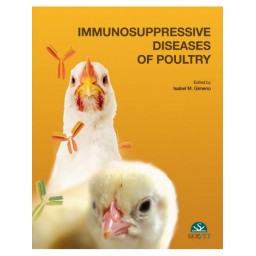
The goal of this work is to present the reader with the most common diseases that can produce immunosuppression in poultry, provide guidance for the diagnosis of immunosuppressive diseases, and examine the challenges that a diagnostician may face in confirming a diagnosis of immunosuppression. The book will feature an extensive collection of color photographs depicting gross and microscopic images.
In this book PNEI paradigm presents itself in its full extension: from the description of the historical and philosophical bases to the biological revolution underway; from the description of nervous, neuroendocrine, immune, and psychic systems and their reciprocal influences; to the modulation tools of the human network for preventive and therapeutic uses.
This book provides a comprehensive review of in ovo techniques and treatments in poultry eggs, which are aimed at improving embryonic development and decreasing economic losses in poultry farms. The book is divided into four chapters, which address the basics of in ovo techniques and sites of in ovo injection, nutrient utilization for the development of the chick embryo, the role of early in ovo feeding for the chick embryo, and applications of in ovo technology for various nutrients and biological supplements in poultry.
The second edition of this educational atlas on cats expands on its initial goal of helping veterinary surgeons communicate with owners by adding to the content of the first edition with 16 new sheets. Needless to say that the previous topics have been revised and updated with the latest developments in each area.