
Pharmaceutical...
The world of health is undergoing a significant evolution. There is a tangible sense of urgency and great expectation that affects everyone: patients, healthcare organizations, doctors and companies.

Active filters
The world of health is undergoing a significant evolution. There is a tangible sense of urgency and great expectation that affects everyone: patients, healthcare organizations, doctors and companies.
This handbook, which highlights the importance of achieving high quality milk levels through a practial and visual approach, has been written by authors with a wide experience in this field. Numerous graphic resources (images, graphs, tables, flowcharts) have been included to complement the information provided and make the contents more understandable and accessible to readers.
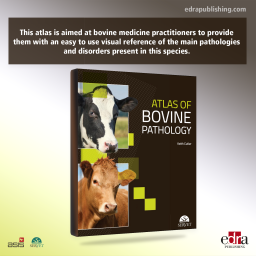
This atlas is aimed at bovine medicine practitioners to provide them with an easy to use visual reference of the main pathologies and disorders present in this species. A wide range of the most common diseases and disorders of cattle are illustrated, grouped by organic system and anatomic location, along with a brief description of the aetiology and pathology of each. The atlas includes the main disorders of cattle including congenital malformations, skin disorders, gastrointestinal, cardiovascular and respiratory conditions and diseases affecting the locomotor system, the nervous system including the sensory organs and the reproductive apparatus of males and females including the mammary gland.
This book provides a comprehensive review of in ovo techniques and treatments in poultry eggs, which are aimed at improving embryonic development and decreasing economic losses in poultry farms. The book is divided into four chapters, which address the basics of in ovo techniques and sites of in ovo injection, nutrient utilization for the development of the chick embryo, the role of early in ovo feeding for the chick embryo, and applications of in ovo technology for various nutrients and biological supplements in poultry.
The second edition of this educational atlas on cats expands on its initial goal of helping veterinary surgeons communicate with owners by adding to the content of the first edition with 16 new sheets. Needless to say that the previous topics have been revised and updated with the latest developments in each area.
Diagnostic imaging is a key component in the care of companion animal patients. In recent decades the available imaging modalities have expanded from conventional radiography to include ultrasonography, computed tomography, and magnetic resonance imaging, and all are employed on a daily basis in both general and specialty veterinary practice.