

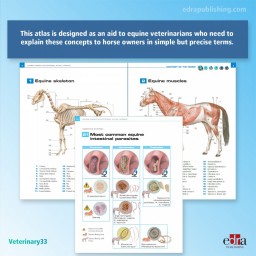


Visual and technical atlas describing general concepts and details of the main diseases affecting horses. This atlas is designed as an aid to equine veterinarians who need to explain these concepts to horse owners in simple but precise terms.
Visual and technical atlas describing general concepts and details of the main diseases affecting horses. This atlas is designed as an aid to equine veterinarians who need to explain these concepts to horse owners in simple but precise terms.
Authors:
MARTA BARBA
Assistant Professor at the Universidad CEU Cardenal Herrera, Spain. Part of the equine internal medicine clinical service at the Veterinary Teaching Hospital of the Universidad CEU Cardenal Herrera, Spain. Diplomate of the American College of Veterinary Internal Medicine - Large Animal.
JOHN SCHUMACHER
Professor of the College of Veterinary Medicine at Auburn University, Alabama. Diplomate of the American College of Veterinary Internal Medicine - Large Animal.
Key Features:
➜ Simple and graphical approach with high-quality illustrations.
➜ Aid in the communication between equine veterinarians and owners.
➜ Organized in thematic sections about the most common diseases and procedures.
Table of Contents:
1. Anatomy of the horse
Equine skeleton
Equine muscles
2. Main disorders by system
Musculoskeletal system
Osteochondrosis
Osteoarthritis. Degenerative joint disease (DJD)
Tendinitis and desmitis
The hoof. Anatomy and common problems
Laminitis
Navicular syndrome
Exertional myopathies
Other muscle disorders
Digestive system
Dental anatomy
Dental problems
Esophageal obstruction
Equine gastric ulcer syndrome (EGUS)
Equine colic. General concepts
Medical equine colic
Surgical equine colic
Equine colitis
Equine colitis. Etiopathogenesis
Hepatic lipidosis
Most common equine intestinal parasites
Cardiorespiratory system
Sinuses. Anatomy
Sinuses and nasal cavity. Common diseases
Guttural pouches. Anatomy
Guttural pouches. Common diseases
Laryngeal hemiplegia
Pleuropneumonia
Equine asthma
Equine cardiac electrophysiology
Equine arrhythmias
Physiologic cardiac murmurs
Pathologic cardiac murmurs
Nervous system
Wobbler syndrome. Cervical vertebral stenotic
myelopathy
Equine protozoal myeloencephalitis (EPM)
Viral encephalomyelitis. West Nile virus disease.
Eastern and western equine encephalomyelitis
Facial nerve paralysis and vestibular disease
Headshaking syndrome
Endocrine system
Cushing’s syndrome. Pituitary pars intermedia
dysfunction (PPID)
Equine metabolic syndrome (EMS)
Urogenital system
Acute and chronic kidney disease
Urolithiasis
Breeding of the mare
Endometritis
Castration
Cryptorchidism
Skin and integumentary system
Ectoparasites and insect bite hypersensitivity
Wound management and healing process
Skin tumors. Sarcoids
Skin tumors. Other skin tumors
Eyes
Structures of the eye
Corneal ulcers and keratitis
Stromal abscess
Equine recurrent uveitis
3. Neonatal disorders
Failure of transfer of passive immunity (FTPI)
Septicemia and septic arthritis
Hypoxic ischemic encephalopathy. Dummy foal
Flexural limb deformities
Angular limb deformities
4. Infectious diseases
Equine respiratory viruses. Equine influenza virus,
equine herpesvirus, and equine arteritis virus
Equine piroplasmosis
Strangles
5. Special techniques
Nerve and joint blocks in a lameness examination.
Front limb blocks
Nerve and joint blocks in a lameness examination.
Hind limb blocks
Nasogastric tube placement
How to administer drugs
6. Behavior and management
Normal posture and gait
Stereotypic behavior
Parturition
Neonatal management
Data sheet
Specific References
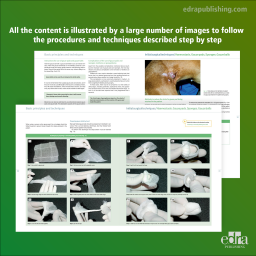
In this book, the authors have tried to show, in a brief and practical manner, the basic principles and techniques that veterinary surgeons, nurses and students should know, master and improve to enhance the surgical care provided to their patients.The book features chapters about the different methods and techniques to control bacterial contamination and surgical infection, both in terms of the fight against microorganisms and the surgeons’ and assistants’ practices in the operating theatre.
Pets, particularly cats and dogs, are living longer than ever before. Almost half of their lifespan makes app the senior/geriatric life stage. This book is a practical manual that comprehensively covers geriatric medicine of dogs and cats, and provides readers, whether veterinary surgeons working in routine clinical practice or students approaching the end of their veterinary medicine degree, with a different approach to clinically useful information on this topic. In this second edition all chapters have been rigorously reviewed and updated, with a particular emphasis on pharmacological protocols and dosages and new therapies. An entire new chapter on endocrine problems in senior pets has been added.
Cette deuxième édition, en plus d’offrir les bases de l’interprétation radiologique et du diagnostic des pathologies, élargit considérablement son contenu avec un chapitre sur les principes de la radiologie et un atlas de positionnement et d’anatomie radiographique, comportant des indications très claires et précises pour obtenir les meilleurs résultats lors du diagnostic radiologique.
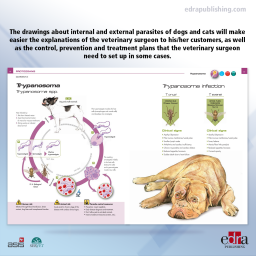
This illustrated work has the aim to assist the veterinary surgeon with his/her communication with the pet owner. Following the last book spirit dedicated to surgery, in this atlas, the drawings about internal and external parasites of dogs and cats will make easier the explanations of the veterinary surgeon to his/her customers, as well as the control, prevention, and treatment plans that the veterinary surgeon needs to set up in some cases. The clarity and accuracy of the drawings, designed to make it understandable and to reduce the time spent on the explanations to the pet owner, make this atlas another useful clinical tool. This book is aimed at veterinary surgeons, students, teachers, and professionals in this field.
This book is intended as a practical guide to enable small animal clinical veterinary surgeons and their teams to improve various aspects of their everyday practice: how they understand and relate to patients and clients, how they manage their work, the handling of animals during different procedures, and the implementation of programs to deal with behavioral issues. These aspects will have a highly positive impact on the well-being of the patient, the client, and the veterinary and support staff, with the implementation of smoother and more effective procedures.
Visual and technical atlas describing general concepts and details of the main diseases affecting horses. This atlas is designed as an aid to equine veterinarians who need to explain these concepts to horse owners in simple but precise terms.