

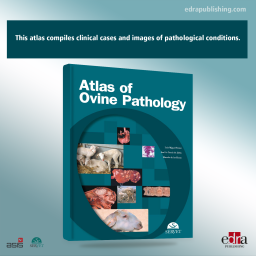
Atlas of Ovine Pathology
This atlas compiles clinical cases and images of pathological conditions. It will be very helpful for any vet needing to recognise macroscopical and microscopical lesions in sheep.
Active filters
This atlas compiles clinical cases and images of pathological conditions. It will be very helpful for any vet needing to recognise macroscopical and microscopical lesions in sheep.
Presentation Seizure disorders are common in small animal practice. The purpose of this book is to provide a comprehensive, evidence-based resource to assist in the successful management of recurrent seizures in dogs and cats. The book’s format is designed to present a logical, clinically relevant approach to a seizure patient, with detailed information on the broad range of topics involved in the diagnosis and treatment of seizure disorders. The clinical and diagnostic approach to the seizure patient is discussed in depth, with dedicated chapters on idiopathic epilepsy in dogs, the genetics of epilepsy, feline epilepsy, quality of life, advanced imaging and electroencephalography.
“Dr. Tony Feck defines the prosperous dental practice in all its aspects. From hiring, leadership, production, and growth, to profitability; no stone is left unturned. The roadmap to follow is clearly and concisely laid out for every dentist to follow. All you have to do is take the first step: read the book, cover to cover and start using the dozens of practical forms and outlines which Feck provides.” Dr. Christopher Phelps, DMD CMCT
Among the anxiety disorders, Panic Disorder (PD) is one of the most common forms of psychological distress in contemporary societies, often present in comorbidities with depressive disorders or addictions. It is extremely debilitating, and frequently associated with high levels of social, occupational, and physical disability. EMDR (Eye Movement Desensitization and Reproces¬sing) is the first choice to treat traumatic or stress related disorders, and for several years has also been demonstrably effective in PD.
The white coat has its roots in the Arabic word ‘qamiç’, meaning a tunic, a long, white linen underrobe worn by priests during the celebration of divine offices, but also in the Greek word ‘kámasos’, a square-shaped, sleeveless garment made of cotton, linen, or silk. The ancient Romans used it as an undergarment and adopted the Hellenic name. The first ones were beige, then they took on various colors depending on the activity of professionals and artists. However, the first person to wear a white coat was not a doctor.