Management Solutions...
Pere Mercader, a consultant with wide experience in the veterinary sector, provides us with the keys to efficient veterinary centre management and IT management tools for calculations and assessments in the clinic.
Active filters
Pere Mercader, a consultant with wide experience in the veterinary sector, provides us with the keys to efficient veterinary centre management and IT management tools for calculations and assessments in the clinic.

This guide compiles practical information to aid veterinary clinicians in managing cancer patients, and covers aspects related to diagnosis, prognosis, and treatment, as well as pain management and communication with owners. It has been developed by leading specialists in oncology who approach the subject from a practical perspective, and includes many images, tables, and diagrams that facilitate understanding of its content and make it an essential volume on the bookshelves of any veterinary clinic.
The most updated information on avian influenza with a practical approach. The authors review the aetiology, clinical signs, diagnosis, and control of avian influenza viruses. It also includes numerous graphic resources to make the contents more understandable to readers.
Correct vaccination of dogs and cats requires consideration of a broad range of clinical situations and vaccination options, and obliges veterinary surgeons to constantly update their knowledge in order to appropriately deal with the challenges that arise in daily clinical practice. Using a thoroughly practical approach, this book takes an in-depth look at vaccines and vaccination to provide veterinary professionals with the information they require to address the many doubts and questions that arise in relation to this topic.
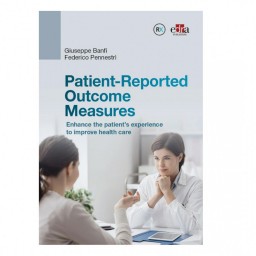
Growing investments in healthcare do not necessarily produce corresponding improvements in the perceived health of their recipients, whether individual patients or society as a whole. Sometimes, even the opposite is true: growing investments in healthcare lead to lower benefits perceived by patients. How to quantify the health regained by patients? How to measure what for does it really matter to them when physical health is not fully recoverable? How to help physicians and administrators identify the correct objectives and improvements? What scientific instruments can estimate the prospect of patients and society in allocating limited resources? The development of the Patient Reported Outcome Measurements (PROMs) helps answer many of these challenges.