Pharmaceutical...
The world of health is undergoing a significant evolution. There is a tangible sense of urgency and great expectation that affects everyone: patients, healthcare organizations, doctors and companies.

Active filters
The world of health is undergoing a significant evolution. There is a tangible sense of urgency and great expectation that affects everyone: patients, healthcare organizations, doctors and companies.

This new book in the Small Animal Surgery series reviews some of the surgical errors and complications that may occur in daily practice when performing surgery. It is intended for surgeons starting their professional careers and residents, as well as experienced veterinary surgeons, since it must not be forgotten that errors can occur at any time, no matter how much experience one may have.
A visual guide with a strongly educational approach covering the main joints in the limbs of the dog. It shows the anatomical elements of each of these joints in three-dimensional diagrams. The views chosen for each case have been selected for a practical purpose, showing the position of the elements involved in the most commonly used surgical approaches. It also describes the key orthopaedic conditions affecting each joint and the most commonly used surgical approaches. It contains a large number of images and illustrations, and a selection of views presented in digital video format.
This manual on surgery, gathering 30 clinical cases, provides the reader with a better understanding to perform surgeries in dogs and cats with gastrointestinal disorders. Both simple and complex cases are addressed, detailing patient’s history, physical examination, surgical preparation and technique, as well as additional considerations. It is the intention of the authors of this book to present a series of assorted surgical cases related to the digestive system. Surgical situations of dogs and cats with a more frequent presentation, but because of that none less challenging, will be included. Some less commonly presentations, with their own puzzling demands, will be also addressed.
A visual atlas which describes –day by day– the hole process of embryonic development in order to be able to identify critical points in this process so a final and correct diagnosis can be established.
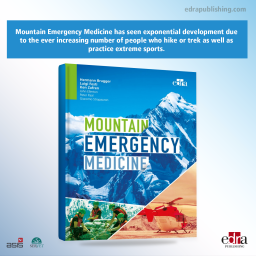
Mountain Emergency Medicine has seen exponential development due to the ever-increasing number of people who hike or trek as well as practice extreme sports. Emergency physicians and nurses need to be equipped with the necessary training to be able to manage “on the field” accidents and sicknesses as well as their own physical security. Theoretical knowledge is generally of high level but practical expertise is dangerously lacking in many operators. Furthermore, treatment modalities on the field have not been completely codified and are not supported by internationally-accepted guidelines. This book is the first to offer a complete and thorough approach to this field of Emergency Medicine based on the latest research findings.