Good Practice and...
Professional responsibility, “good practice and malpractice” in obstetrics is one of the major areas of medical-legal litigation.
Active filters
Professional responsibility, “good practice and malpractice” in obstetrics is one of the major areas of medical-legal litigation.
Electrocardiography of the dog and cat, 2nd edition provides all the theoretical and practical information necessary to understand and identify rhythm abnormalities. This text will be particularly useful to accurately diagnose complex arrhythmias using precise electrocardiographic criteria that the authors have developed by confirming mechanisms of arrhythmias with intracardiac electrophysiologic studies. This book is a must-have reference for anyone interested in learning the basics of electrocardiography and those who face the challenge of interpreting the most complex arrhythmias in a clinical or research setting.
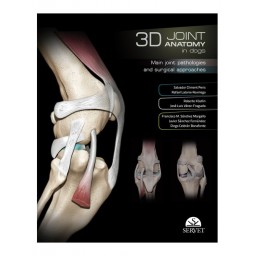
A visual guide with a strongly educational approach covering the main joints in the limbs of the dog. It shows the anatomical elements of each of these joints in three-dimensional diagrams. The views chosen for each case have been selected for a practical purpose, showing the position of the elements involved in the most commonly used surgical approaches. It also describes the key orthopaedic conditions affecting each joint and the most commonly used surgical approaches. It contains a large number of images and illustrations, and a selection of views presented in digital video format.
Obstructive sleep apnea syndrome (OSAS) is a very common disorder, affecting a large percentage of the population. Often undiagnosed, it increases the risk of heart attack, stroke, arterial hypertension, diabetes and other chronic medical conditions. Dentists with expertise in sleep medicine can easily identify signs and symptoms of OSA, facilitate referral, and provide effective treatments in collaboration with medical providers. This text aims to provide an overview of relevant topics to dentists who want to include sleep medicine in their clinical practice.
Diagnostic imaging is a key component in the care of companion animal patients. In recent decades the available imaging modalities have expanded from conventional radiography to include ultrasonography, computed tomography, and magnetic resonance imaging, and all are employed on a daily basis in both general and specialty veterinary practice.
This volume clarifies the importance of training techniques and methods for those looking for a notable hypertrophic response within a body recomposition process.