Pharmaceutical...
The world of health is undergoing a significant evolution. There is a tangible sense of urgency and great expectation that affects everyone: patients, healthcare organizations, doctors and companies.

Active filters
The world of health is undergoing a significant evolution. There is a tangible sense of urgency and great expectation that affects everyone: patients, healthcare organizations, doctors and companies.
This book describes the different clinical aspects a veterinary surgeon should bear in mind when dealing with a senior patient. It addresses, by organ system, the particularities of the different diseases typical of this stage of life, the corresponding diagnostic protocols, and the special care and treatment required, with an emphasis on the most recent medical and surgical approaches and on the management of anaesthesia for surgical procedures.
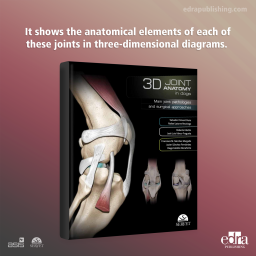
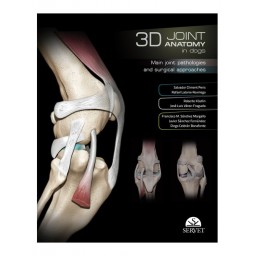
A visual guide with a strongly educational approach covering the main joints in the limbs of the dog. It shows the anatomical elements of each of these joints in three-dimensional diagrams. The views chosen for each case have been selected for a practical purpose, showing the position of the elements involved in the most commonly used surgical approaches. It also describes the key orthopaedic conditions affecting each joint and the most commonly used surgical approaches. It contains a large number of images and illustrations, and a selection of views presented in digital video format.
The goal of this work is to present the reader with the most common diseases that can produce immunosuppression in poultry, provide guidance for the diagnosis of immunosuppressive diseases, and examine the challenges that a diagnostician may face in confirming a diagnosis of immunosuppression. The book will feature an extensive collection of color photographs depicting gross and microscopic images.
This book is intended as a practical guide to enable small animal clinical veterinary surgeons and their teams to improve various aspects of their everyday practice: how they understand and relate to patients and clients, how they manage their work, the handling of animals during different procedures, and the implementation of programs to deal with behavioral issues. These aspects will have a highly positive impact on the well-being of the patient, the client, and the veterinary and support staff, with the implementation of smoother and more effective procedures.