Pharmaceutical...
The world of health is undergoing a significant evolution. There is a tangible sense of urgency and great expectation that affects everyone: patients, healthcare organizations, doctors and companies.

Active filters
The world of health is undergoing a significant evolution. There is a tangible sense of urgency and great expectation that affects everyone: patients, healthcare organizations, doctors and companies.

This book describes the different clinical aspects a veterinary surgeon should bear in mind when dealing with a senior patient. It addresses, by organ system, the particularities of the different diseases typical of this stage of life, the corresponding diagnostic protocols, and the special care and treatment required, with an emphasis on the most recent medical and surgical approaches and on the management of anaesthesia for surgical procedures.
This handbook, which highlights the importance of achieving high quality milk levels through a practial and visual approach, has been written by authors with a wide experience in this field. Numerous graphic resources (images, graphs, tables, flowcharts) have been included to complement the information provided and make the contents more understandable and accessible to readers.
Correct vaccination of dogs and cats requires consideration of a broad range of clinical situations and vaccination options, and obliges veterinary surgeons to constantly update their knowledge in order to appropriately deal with the challenges that arise in daily clinical practice. Using a thoroughly practical approach, this book takes an in-depth look at vaccines and vaccination to provide veterinary professionals with the information they require to address the many doubts and questions that arise in relation to this topic.
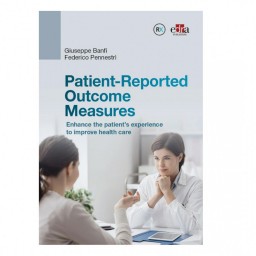
Growing investments in healthcare do not necessarily produce corresponding improvements in the perceived health of their recipients, whether individual patients or society as a whole. Sometimes, even the opposite is true: growing investments in healthcare lead to lower benefits perceived by patients. How to quantify the health regained by patients? How to measure what for does it really matter to them when physical health is not fully recoverable? How to help physicians and administrators identify the correct objectives and improvements? What scientific instruments can estimate the prospect of patients and society in allocating limited resources? The development of the Patient Reported Outcome Measurements (PROMs) helps answer many of these challenges.