Pharmaceutical...
The world of health is undergoing a significant evolution. There is a tangible sense of urgency and great expectation that affects everyone: patients, healthcare organizations, doctors and companies.

Active filters
The world of health is undergoing a significant evolution. There is a tangible sense of urgency and great expectation that affects everyone: patients, healthcare organizations, doctors and companies.
This book deals with the main orthopaedic conditions of the stifle joint in dogs and cats, so veterinary surgeons can assess, diagnose and treat the disorders commonly seen in their practice. It is intended to help veterinary clinicians make a correct diagnosis and prognosis and establish the most appropriate drug or surgical treatment for each case. Orthopaedic pathologies of the stifle joint contains plenty of high-quality images and illustrations as well as links to videos through QR codes, which provide additional information and contribute to making the book even more practical.
This handbook, which highlights the importance of achieving high quality milk levels through a practial and visual approach, has been written by authors with a wide experience in this field. Numerous graphic resources (images, graphs, tables, flowcharts) have been included to complement the information provided and make the contents more understandable and accessible to readers.
Correct vaccination of dogs and cats requires consideration of a broad range of clinical situations and vaccination options, and obliges veterinary surgeons to constantly update their knowledge in order to appropriately deal with the challenges that arise in daily clinical practice. Using a thoroughly practical approach, this book takes an in-depth look at vaccines and vaccination to provide veterinary professionals with the information they require to address the many doubts and questions that arise in relation to this topic.
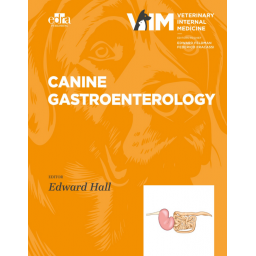
The book is divided into six sections, starting with the diagnostic approach to specific clinical presentations that may or may not be due to GI disease, with each chapter including an algorithmic pathway. A section on diagnostic methods is followed by sections about the management of GI diseases and non-specific and specific drug treatments. The fifth section covers diffuse inflammatory, infectious and neoplastic diseases of the GI tract. Specific diseases of each area of the tract from esophagus to large intestine are found in the final section.