Pharmaceutical...
The world of health is undergoing a significant evolution. There is a tangible sense of urgency and great expectation that affects everyone: patients, healthcare organizations, doctors and companies.
Active filters
The world of health is undergoing a significant evolution. There is a tangible sense of urgency and great expectation that affects everyone: patients, healthcare organizations, doctors and companies.
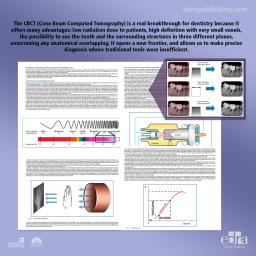
The CBCT (Cone Beam Computed Tomography) is a real breakthrough for dentistry because it offers many advantages: low radiation dose to patients, high definition with very small voxels, the possibility to see the tooth and the surrounding structures in three different planes, overcoming any anatomical overlapping. The introductory chapters provide the reader with the knowledge and basic tools to understand the CBCT. Everything else is an atlas, highly enjoyable, which includes the use of CBCT in both clinical and surgical dentistry, and describes in details not only the diagnostic phase but also the operational use to program the individual case, and control the future outcome.
This book, structured according to the normal anatomical areas in radiological diagnostic imaging: abdomen, neck, thorax, limbs, spine, and head, offers the key aspects of both radiographic interpretation and the diagnosis of diseases, as well as a special chapter with the most common diagnostic errors. Its more than 500 high-resolution images are accompanied by the necessary text to increase their descriptive value. In addition, the book is complemented by multimedia material, which can be accessed through QR codes located throughout the text. In this way, the reader can access different normal radiographic anatomy diagrams, both with and without the anatomical details identified. All these elements make this book a reference in the field of clinical radiology.

A visual atlas which describes –day by day– the hole process of embryonic development in order to be able to identify critical points in this process so a final and correct diagnosis can be established.
The goal of this work is to present the reader with the most common diseases that can produce immunosuppression in poultry, provide guidance for the diagnosis of immunosuppressive diseases, and examine the challenges that a diagnostician may face in confirming a diagnosis of immunosuppression. The book will feature an extensive collection of color photographs depicting gross and microscopic images.
The second edition of this educational atlas on cats expands on its initial goal of helping veterinary surgeons communicate with owners by adding to the content of the first edition with 16 new sheets. Needless to say that the previous topics have been revised and updated with the latest developments in each area.