Stress, compassion...
There is a need to publicize the syndromes occurring in veterinary personnel due to work-related stress. Vets are apathetic or leaving the profession.
Active filters
There is a need to publicize the syndromes occurring in veterinary personnel due to work-related stress. Vets are apathetic or leaving the profession.
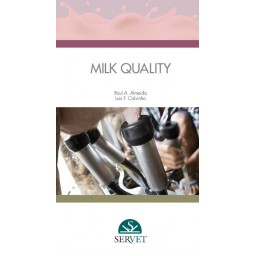
This handbook, which highlights the importance of achieving high quality milk levels through a practial and visual approach, has been written by authors with a wide experience in this field. Numerous graphic resources (images, graphs, tables, flowcharts) have been included to complement the information provided and make the contents more understandable and accessible to readers.
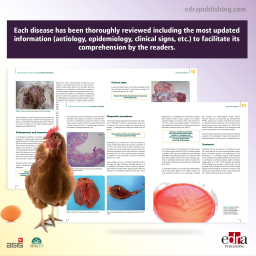
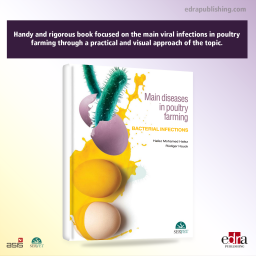
Handy and rigorous book focused on the main bacterial infections in poultry farming. It combines relevant information when dealing with the diseases and scientific background information. Each chapter comprises the most updated information to better understand the various infections and numerous high-quality images have been included to complement the information provided.
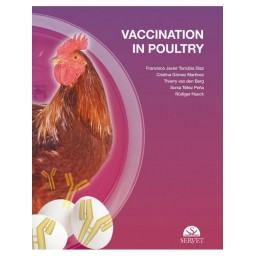
Vaccination is one of the cornerstones of poultry production. In fact, it is one of the aspects that most influence production parameters in the poultry industry. In broilers, the optimum time of vaccination should aim at obtaining the maximum meat yield. In layers and breeders, both time and the route of administration have an influence in the quality of egg shells and the number of eggs per laying, among others.
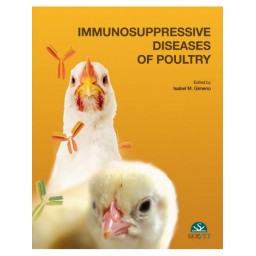
The goal of this work is to present the reader with the most common diseases that can produce immunosuppression in poultry, provide guidance for the diagnosis of immunosuppressive diseases, and examine the challenges that a diagnostician may face in confirming a diagnosis of immunosuppression. The book will feature an extensive collection of color photographs depicting gross and microscopic images.
Diseases of the liver and pancreas can cause a degree of despair in veterinary practitioners: so much about the causes and treatments of these diseases is poorly understood, and too many cases remain idiopathic. This book guides both first and second opinion practitioners through clinical assessments and workups, preventing oversight of potential underlying causes. Subsequent sections meticulously delve into pancreatic and liver diseases, encompassing clinical pathology, imaging, biopsy acquisition, cytology, and histology, all expertly elucidated by specialists.
A new application method and a different clinical reasoning compared to other types of taping and bandaging are the basis of the NeuroMuscular decompressive and compressive taping technique. To illustrate this innovative rehabilitation treatment, this book aims to answer these fundamental questions: When is NeuroMuscular Taping applied? How is it applied? What clinical advantages does it offer?
The book shows the modes of application and benefits of NeuroMuscular Taping in post-surgical and post-traumatic drainage of edemas and hematomas, as well as in the treatment of scars.