
Edra Publishing US LLC | Books, Ebooks, Journals, and Education

Filter By

Categories

Categories

Product type

Product type

Pub date

Pub date

Product type

Product type

Author

Author

Home

Active filters

  • Author: David Blow
  • Author: David Blow
  • Author: Giuseppe Banfi MD
  • Author: Manuela Perego
  • Author: Ricardo Cepero Briz
  • Author: Riccardo Gaspari
Electrocardiography of the dog and cat. Diagnosis of arrhythmias. II Edition - book cover - veterinary book Electrocardiography of the dog and cat. Diagnosis of arrhythmias. II Edition - book cover - veterinary book

Electrocardiography of...

Price CAD 132.30

Electrocardiography of the dog and cat, 2nd edition provides all the theoretical and practical information necessary to understand and identify rhythm abnormalities. This text will be particularly useful to accurately diagnose complex arrhythmias using precise electrocardiographic criteria that the authors have developed by confirming mechanisms of arrhythmias with intracardiac electrophysiologic studies. This book is a must-have reference for anyone interested in learning the basics of electrocardiography and those who face the challenge of interpreting the most complex arrhythmias in a clinical or research setting.


Neuromuscular Taping - From...

Neuromuscular Taping -...

Price CAD 90.30

A  new  application  method  and  a  different  clinical  reasoning  compared  to  other  types  of  taping  and bandaging are the basis of the NeuroMuscular decompressive and compressive taping technique. To illustrate  this  innovative  rehabilitation  treatment,  this  book  aims  to  answer  these  fundamental questions: When is NeuroMuscular Taping applied? How is it applied? What clinical advantages does it offer?

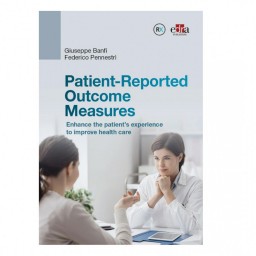
Patient-Reported Outcome...

Patient-Reported...

Price CAD 75.60

Growing investments in healthcare do not necessarily produce corresponding improvements in the perceived health of their recipients, whether individual patients or society as a whole. Sometimes, even the opposite is true: growing investments in healthcare lead to lower benefits perceived by patients. How to quantify the health regained by patients? How to measure what for does it really matter to them when physical health is not fully recoverable? How to help physicians and administrators identify the correct objectives and improvements? What scientific instruments can estimate the prospect of patients and society in allocating limited resources? The development of the Patient Reported Outcome Measurements (PROMs) helps answer many of these challenges.